
Across the U.S., in places where World Cup games have been hosted, people have gotten a front-row seat to fandom at its purest. Here in Boston, we’ve always been a sports town — but nobody can argue that hosting the World Cup hit differently. It’s electric. Contagious. And it’s had me thinking about human nature, community, fandom, and what business leaders could stand to learn from the World Cup.
From fear to love, almost overnight
Before the games began, I don’t think any of us would have predicted what actually happened. In the weeks leading up to kickoff, the local coverage leaned hard into anxiety: stories about security perimeters and National Guard deployments, drone threats, hour-plus security lines, gridlock on Route 1, and “see something, say something” warnings. The undertone was clear — brace yourselves, and maybe just avoid the city if you can.
Then the fans landed. And almost immediately, the tone flipped from fear to love.
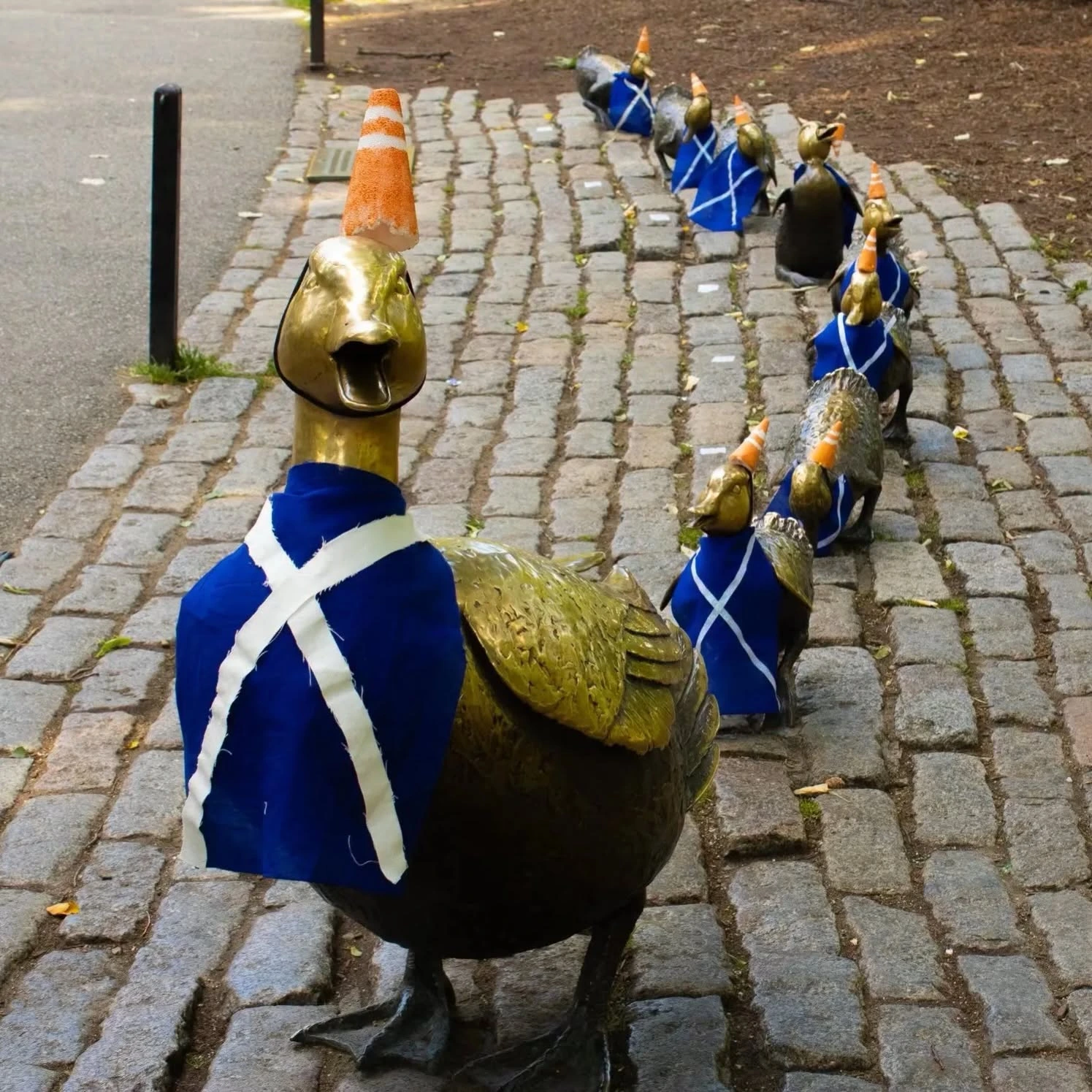
Tens of thousands of Scotland’s Tartan Army poured into Boston in kilts, playing bagpipes outside pubs in Charlestown, marching down Lansdowne Street to Fenway Park, and singing their entire repertoire in the stands until the whole ballpark joined in. They drank Boston’s bars dry — the Sam Adams taproom literally ran out of Boston Lager. They put traffic cones on the heads of statues. And along the way, they quietly did things nobody asked them to do: a $10,000 donation to Hasbro Children’s Hospital in Providence, a charity walk across the country ahead of the tournament, a sister-city partnership between Boston and Glasgow signed during their visit. When they finally packed up for Miami, the Massachusetts State Police Pipes and Drums unit sent them off, and the Governor and the Red Sox’s own team president went out of their way to say how much the city had come to love them back.
It wasn’t just the Scots. Moroccan, Iraqi, Haitian, and Norwegian fans filled our streets too, and the story was the same: they’d heard the warnings about unfriendly Americans, brutal traffic, and big-city crime — and they were genuinely surprised at how untrue it all turned out to be.
Meanwhile, we Americans were surprised right back.
Somehow, with hundreds of thousands of “foreigners” suddenly calling our city home for a few weeks, Boston felt more welcoming, more connected, and — strangely — prouder of itself than it had in a long time.
Maybe it’s because sports do something to us. Sports pull us into a community that has nothing to do with anything but the love of a game and a shared goal. We call one another ‘fans’ for a reason. It’s playful, it’s unpredictable, and yet we all feel like we carry some personal stake in the shared outcome. Sports take you out of the day-to-day and reconnect you on a more primal level. And win or lose, the feeling of belonging doesn’t go away.
That’s the part that business leaders should be paying attention to. As a business owner/leader, here’s what I see:
The obvious lessons
Identity. Fans bleed their team’s colors. They wear them, paint them across their faces and chests, and carry that identity into everything they do as a fan. It’s not a logo on a hat — it’s who they are for the day. Most companies treat their brand identity as a visual style guide. Fans remind us it’s supposed to be a feeling people choose to wear.
Shared vocabulary. The chants, the songs, the call-and-response — everyone in the stadium knows the words, and singing them together is what makes a stranger feel like part of the group. A company will spend a lot of time wordsmithing taglines, but if the employees and clients value being part of the business community, they will organically build the kind of shared language that they actually want to say out loud, together.
The less obvious lessons
Rituals. Fans cling to rituals and superstitions— the lucky jersey that never gets washed, the same seat, the same walk to the stadium, the same pre-match routine — with a devotion that has nothing to do with logic. Why? Because deep down, fans know they don’t control the outcome. The ritual isn’t really about luck. It’s a way of feeling like you contributed to the win — or at least making sure you can’t be blamed for the loss. Strong business cultures create their own version of this: small, repeated rituals that give people a sense of ownership over a shared outcome, even when the larger result is out of any one person’s hands.
Playfulness. Fandom is a reminder that things don’t have to be so serious all the time. Company culture can’t fully disconnect from the day-to-day the way sports fandom does, and it shouldn’t try to. But the best companies still hold onto shared goals and teamwork without treating every meeting like it’s life or death. A little levity isn’t a distraction from performance — it’s often what makes people want to show up for each other in the first place.
Remembering the bigger picture. This is the biggest lesson of all. The Tartan Army weren’t in Boston to do good deeds — they were here for a football match. And yet they showed up for our community anyway, in ways nobody asked for and nobody expected. That’s the difference between a business leader that performs values and one that actually has them: showing your heart even when it has nothing to do with the reason you walked in the door.
The takeaway
Business leaders can spend enormous energy trying to manufacture loyalty, community, and a sense of belonging for a company. Sports fans remind us those things can’t really be manufactured — they have to be earned, and then given room to grow on their own. Identity, language, ritual, levity, and generosity aren’t a campaign. They’re what defines a culture. Build a strong company culture, and the loyalty – and the brand – will follow. It is not the other way around.
Boston will always love sports, and this summer, we fell hard for the World Cup and the fans who came with it. Thanks for the joy, the chaos, the bagpipes, and the unexpected generosity. And thanks for the reminder of what makes us human — turns out, we needed it.
Image Credit: Original image courtesy of NBC10 Boston. Source: https://www.facebook.com/NBC10Boston.